Digital Waste Tracking in Healthcare – What Changed in October 2026

On 1 October 2026, digital waste tracking became a legal requirement in England and Wales. But what does it mean? Does every hospital, GP practice and pharmacy now need to log its own waste online?
Not necessarily. The first phase of mandatory digital waste tracking applies to the sites that receive the waste, not every organisation that produces it.
But here’s the part that’s easy to miss:
Every waste record a receiving site creates starts with information generated inside the healthcare facility – the waste description, the classification code, the container count. If it’s unclear on the ward, it’ll be unclear on the national system too.
TOPICS WE WILL COVER:
- What Is Digital Waste Tracking?
- Does Digital Waste Tracking Apply to Healthcare Organisations?
- What Do Receiving Sites Have to Report?
- Do Waste Transfer Notes Still Apply?
- What Should Healthcare Waste Producers Do Now?
- The Record Starts on the Ward
- Questions to Ask Your Waste Partner
- What Is Sharpsmart Doing?
- What Comes Next?
What Is Digital Waste Tracking?
Digital waste tracking is a UK-wide government service replacing fragmented, paper-based waste records with one connected system. Its main job is to tackle waste crime – estimated to cost the UK economy around £1 billion per year.
The service is being built in phases, starting with around 12,000 waste site operators. Under the Digital Waste Tracking (England) Regulations 2026 and the Digital Waste Tracking (Wales) Regulations 2026, operators of permitted or licensed sites receiving controlled waste must now report every load through the government’s ‘Report receipt of waste‘ service.
| Who | Mandatory From | Regulator |
|---|---|---|
| Permitted receiving sites in England | 1 October 2026 | Environment Agency |
| Permitted receiving sites in Wales | 1 October 2026 | Natural Resources Wales |
| Permitted receiving sites in Scotland | 1 January 2027 | Scottish Environment Protection Agency |
| Permitted receiving sites in Northern Ireland* | January 2027 | Department of Agriculture, Environment and Rural Affairs |
| Waste carriers, brokers and dealers | Planned from October 2027 | All four nations |
*Northern Ireland’s date has moved from October 2026 to January 2027 since early announcements.
Does Digital Waste Tracking Apply to Healthcare Organisations?
Your role in the waste disposal chain determines this, not whether you deliver healthcare or generate waste.
Most hospitals, GP practices, pharmacies and laboratories are waste producers, and producing waste alone doesn’t put you in Phase 1 – operating a permitted facility that receives waste does. It’s worth bearing in mind, though, that Government guidance confirms this can include permitted operations on the same site where the waste is produced.
| If Your Organisation… | Phase 1 Position | What It Means |
|---|---|---|
| Operates a permitted facility receiving controlled waste, including on-site | Directly in scope | Report every load received through the service |
| Only produces waste | Not automatically required to report | Your existing Duty of Care continues as is |
| Relies on a registered waste exemption rather than a permit | Not in Phase 1 | Exemptions join in a later phase |
Phase 1 covers all controlled waste arriving at in-scope sites, not just clinical streams. If you’re unsure, check your environmental permit, speak to your estates or waste lead and ask your regulator.
What Do Receiving Sites Have to Report?
In-scope operators must create a digital record for each load and receive a unique digital waste record number by the end of the second working day after receipt. Waste received on a Monday must be reported by 11.59 pm on Wednesday, as weekends and bank holidays don’t count.
The record draws on information including:
- Who received the waste, where, when and under which permit.
- The carrier, broker or dealer and their registration details.
- A waste description and six-digit List of Waste (LoW) / European Waste Catalogue (EWC) code.
- Weight by waste code (actual or estimated) and the type and number of containers.
- Hazardous Property codes, relevant components and the consignment note code for hazardous loads.
- Physical form and special handling requirements.
Many of those details originate with you as the producer, as part of your existing Duty of Care. If a stream is classified loosely at source, the receiving site inherits the problem on a two-day clock. You may not submit the final digital record, but you are responsible for the information inside it.
With penalties ranging from compliance notices to prosecution, receiving sites will want dependable data from their customers.
 Do Waste Transfer Notes Still Apply?
Yes. Digital waste tracking doesn’t replace existing paperwork, at least not yet…
Government guidance says the current paper-based process continues alongside the digital service as normal for now. Waste transfer notes, hazardous waste consignment notes and Annex VII forms are still required wherever they applied before.
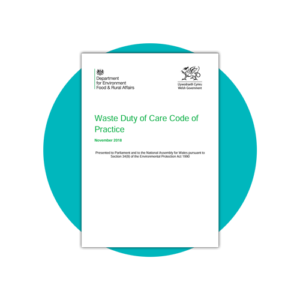
Existing retention rules still stand too. Under the Waste Duty of Care Code of Practice, that’s generally two years for non-hazardous transfer records and three years for hazardous waste consignment notes.
What Should Healthcare Waste Producers Do Now?
Your Duty of Care hasn’t changed, but the information you create now feeds a far more visible system. Use the changeover to check:
- Your role: Confirm whether any part of your organisation operates a permitted waste-receiving activity before assuming you’re outside Phase 1.
- Classification: Check every stream, from sharps and pharmaceutical to offensive waste, carries the right description, LoW/EWC code and hazardous properties.
- Segregation at source: Mixing streams invalidates the description, so the point of disposal is where data quality is won or lost.
- Consistency: Capture weights, container types and collection details the same way every time.
- Contractor assurance: Verify carrier registrations, site permits and treatment routes, and make sure contracts cover timely, accurate data exchange.
- People: Give the clinical teams, porters and estates staff who create this data clear, practical guidance.
Our healthcare waste management checklist and guide to healthcare waste segregation are useful starting points.

The Record Starts on the Ward
Going forward, it’ll be tempting to see digital waste tracking as a job for waste providers, but that misses a big opportunity.
Although the national system starts at the receiving site’s gate, the information it records begins at the bedside, in the sluice, and in theatres – wherever waste is identified, segregated, and disposed of. Digitising a poor-quality record won’t improve it; it’ll simply highlight the gaps in the disposal process.
That’s why Health Technical Memorandum (HTM) 07-01 and the NHS Clinical Waste Strategy place so much weight on accurate segregation, clear records and consistent data. Good data helps teams spot segregation issues, challenge unexplained variances and make better cost and carbon decisions, including progress towards a Net Zero NHS.
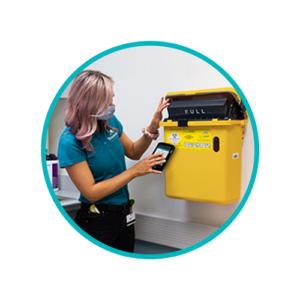
This is where working inside the four walls matters, and it’s part of our approach at Sharpsmart: using our healthcare waste tracking technology (TRACE), waste audits and pre-acceptance audits, we give healthcare teams the visibility they need to strengthen waste traceability and target support where it matters most.
Whilst technology can’t replace clear ownership and good processes, it can surface problems early, before they become a rejected load or a discrepancy on someone else’s record.
Questions to Ask Your Waste Partner
- Which receiving sites handling our waste are in scope now, and have they registered and tested their submissions?
- Who corrects inaccurate classifications, weights or consignment details, and how quickly?
- What reporting will we receive, and how will it help us improve?
- How are you preparing for the collector phase planned for October 2027?
 What Is Sharpsmart Doing?
Here’s how we answer those questions ourselves.
- Reporting is automatic. Digital waste tracking is built into our operational system, so waste received at our sites is reported to the government service automatically.
- Every requirement was checked. Our Business Change and Transformation Manager and Compliance Manager oversaw the work, reviewing our waste data and checking every requirement against Defra guidance so we were fully compliant from 1 October 2026.
- Phase 2 is already underway. We’re preparing our collection and transport operations now, so they’re ready for October 2027.
What Comes Next?
Scotland and Northern Ireland follow England and Wales in January 2027. Waste carriers, brokers and dealers move into a private beta from autumn 2026 and a public beta from spring 2027, with mandatory use planned from October 2027. Registered waste exemptions will be brought in at a later phase.
There’s no confirmed date yet for waste producers to report directly, so treat any claims to the contrary with caution.
Make Your Waste Data Work Harder
Digital waste tracking may start at the weighbridge, but the record is written long before the lorry arrives. Strengthen classification, segregation and contractor assurance now, and you’ll gain more than compliance: waste data you can act on.
Want to know how strong your waste data really is? Talk to a Sharpsmart waste consultant about a Waste Trends Audit and see where you stand, ward by ward.
This article is general information, not legal advice. Where your status is unclear, check your environmental permit and your regulator’s guidance.

Josh Glover
Digital Waste Tracking FAQs
Let's Talk!
Your time is valuable, and we don’t want to play hard to get. You can either phone us directly on the details listed on our contact page, or feel free to fill out this short form and one of our team members will get back to you as quickly as possible.