The Importance of Correct Healthcare Waste Bin Tagging
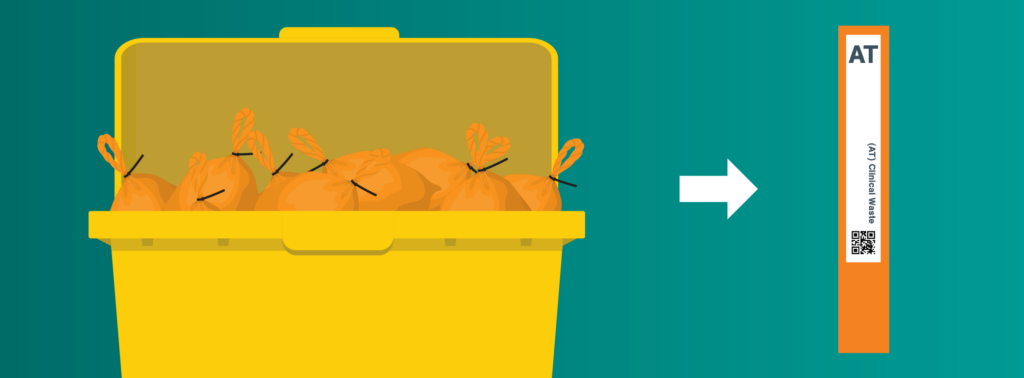
Ever had a bin that just doesn’t get collected? Or waste volumes that spike without explanation? We might know why…
Correct healthcare waste bin tagging is one of the final control points before waste leaves your site. When it’s done right, your legal duty of care to correctly describe waste is achieved. The final treatment and disposal are appropriate for the waste produced, and most importantly, you are protecting human health and the environment.
When it’s wrong, the consequences show up fast. In some cases, overclassification of waste. non-compliance with waste legislation, avoidable costs, increased carbon emissions and increased risk.
This guide supports both hospital waste compounds and primary/community healthcare sites in getting 770l clinical waste bin tagging right – every time.
TOPICS WE WILL COVER:
1 / Why Healthcare Waste Bin Tagging Accuracy Matters
2 / The Most Common Healthcare Bin Tagging Mistakes
3 / The Tagging Process for 770L Healthcare Waste Bins
4 / Acute vs Primary Healthcare Best Practices
5 / The Impacts of Incorrect Bin Tagging
6 / A 60-Second ‘Tag It Right’ Checklist
7 / Support Sustainability with Correct Bin Tagging
8 / Need Help with Bin Tagging or Waste Auditing?
Why Healthcare Waste Bin Tagging Accuracy Matters
Under UK Duty of Care legislation. It’s the responsibility of the waste producer to correctly package and describe waste for onward transport and disposal/treatment.
This means a bin tag is much more than just a label. It links the waste inside the container to:
- The correct treatment and disposal route.
- The appropriate paperwork and consignment process.
- Accurate reporting and billing to avoid any non-conformance reports or charges.
- A compliant and traceable waste journey.
The guidance is clear: each bin must contain one clearly identified waste stream and be tagged correctly before collection.
When tagging goes wrong, the most common outcomes we see are:

- Overtreatment (most common) or undertreatment (most serious risk).
- Unnecessary costs and increased carbon emissions due to overtreatment.
- Service disruption with drivers unable to collect because bins are not considered ready.
- Fluctuating collection volumes caused by untagged bins being left behind.
- Avoidable costs due to incorrect billing or reporting allocation.
And behind each of those outcomes is a real-world knock-on effect: delayed collections create congestion, congestion increases handling, and handling increases risk.
Bin tagging accuracy protects your compliance, your budget, and the safety of everyone handling waste across the full journey.
The Most Common Healthcare Bin Tagging Mistakes
The good news is that bin tagging errors are predictable – which means they’re preventable.
#1 Tagging Too Early or Too Late
Only bins that are ready for collection should be tagged.
If the wheeled bin isn’t full, assess whether it can remain in use until the next scheduled collection. Tagging too early increases the risk that someone will later add a different waste stream. Tagging too late increases the risk of missed collections and double-handling.
Correct timing keeps the process controlled and consistent.
 #2 Mixing Waste Streams or ‘Best Guess’ Tagging
Before applying a tag, always confirm the bin contains a single waste stream.
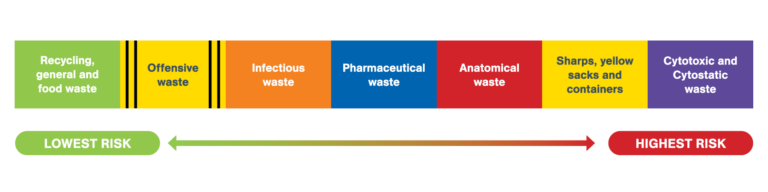
If a bin contains mixed waste and you’re trained and wearing appropriate PPE, separate the waste into the correct bins. If sorting isn’t possible, apply the tag to the highest-risk waste stream in the bin.
For example:
- A single orange infectious bag in a bin of offensive waste means the entire bin must be tagged as orange infectious.
This ‘highest risk wins’ rule prevents undertreatment and ensures compliance. However, it should be treated as a safety net – not a standard practice – as it increases cost and environmental impact compared to properly segregated single-stream bins.
#3 Reusing Bins Without Resetting the Stream
In hospital environments especially, offensive waste bins should be reassigned to other appropriate waste streams once emptied, rather than being repeatedly used for the same lower-risk stream.
Leaving old/used tags in place or habitually using a bin for the same stream increases the risk of misidentification and infection control concerns. Bins are reusable containers – not permanent fixtures – and must be correctly identified each time they are used.
The Tagging Process for 770L Healthcare Waste Bins
A consistent three-step process removes uncertainty and reduces errors.
 Step One: Confirm a Single Waste Stream
When the bin reaches the waste compound or is being prepared for exchange, check for mixing of waste streams.
- If it contains only one waste stream: Apply the matching tag.
- If it contains mixed waste: Sort if trained and wearing suitable PPE.
- If sorting isn’t possible: Tag it as the highest risk waste stream present.
Step Two: Apply the Correct Tag
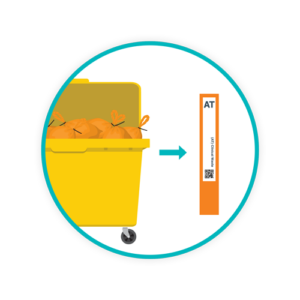
Use your site’s approved bin tagging matrix and process to ensure the correct waste code is selected.
All waste must:
- Be packaged in compliance with legislation for the waste contained.
- Be securely tied (if in bags).
- Never be placed loose inside a 770l bin.
- Sealed (for single-use sharps containers) when the fill line is reached, and placed into the correct bin.
Note: The same healthcare waste colour-coding guidelines that apply at the point of care also apply in the waste compound.
 Step Three: Confirm Collection Readiness
Before moving the bin for collection, ensure:
- The bin is locked and secure.
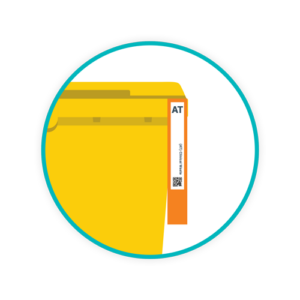
- The tag is correct and clearly visible.
- The bin is not tagged when part-full unless collection is required.
- The storage area remains organised and safe.
If a bin is damaged or cannot lock, apply a defective bin tag and report it immediately.
Acute vs Primary Healthcare Best Practices
While the principles remain the same, operational challenges differ.
Acute Settings (Waste Compounds)
Hospitals typically manage higher volumes, more handovers, and increased bin movement between departments and compounds.
Best practice includes:
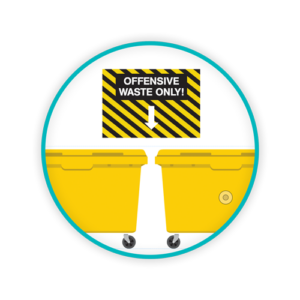
- Storing bins of the same waste stream together, ideally beneath a poster displaying the waste stream type – to reduce cross-contamination risk.
- Keeping emptied waste bins separate from clean, unused bins.
- Separate bins reassigned to a different waste stream from those awaiting first use.
- Maintaining an organised compound to reduce tagging errors.
Good storage discipline directly supports tagging accuracy and audit-readiness whilst reducing the ‘wrong bin, wrong tag’ problem that happens when waste compounds get congested and disorganised.
Primary and Community Settings (Exchange Collections)
Smaller sites often face different pressures:
- Distributed teams and shared responsibilities.
- Less formal waste storage areas.
- Scheduled exchanges with limited on-site support.
A simple time-based control works effectively:
Within 24 hours of your scheduled collection, a staff member should review all bins due for exchange to confirm correct tagging and readiness.
Displaying your tagging standard and matrix where bins are closed, and building them into the onboarding process for new starters and bank staff, also strengthens consistency.
The Impacts of Incorrect Bin Tagging
When tagging breaks down, the effects extend beyond the waste compound.
Failed Collections and Escalating Risk
Bins that cannot be processed with confidence may be left behind. This leads to:
- Congestion in waste holding areas.
- Increased manual handling.
- Greater risk of containment damage to bags and bins.
- Additional workload and pressure on estates and portering teams.
Risk always increases when waste handling increases.
Distorted Waste Data
Untagged bins left behind create artificial peaks and troughs in reported volumes. This affects:
- ERIC reporting accuracy.
- Collection planning.
- Budget forecasting.
- Waste reduction benchmarking.
- Sustainability reporting.
It’s not that the data is wrong – it reflects the waste collected. However, it will appear either inflated or deflated compared to the real waste volumes you’re generating.
Accurate tagging supports reliable data, and reliable data supports informed decision-making.
Billing and Reconciliation Charges
Incorrect tags often result in disputed invoices, credit requests, and time-consuming reconciliations. The effort required to resolve these issues typically exceeds the time needed to tag correctly in the first place.
 A 60-Second ‘Tag It Right’ Checklist
Take a quick 60 seconds to double-check, and you’ll be on the road to success with every bin.
Before a 770l bin leaves your site, take one minute to confirm:
- Bin is locked and secure.
- Waste is bagged, in liners, and tied.
- Only one waste stream is present.
- Mixed waste has been sorted or tagged as the highest risk waste present.
- Bin is genuinely ready for collection.
- Storage area remains tidy and bin brakes are engaged.
- Damaged bins are tagged defective and reported.
Support Sustainability with Correct Bin Tagging
Whether your facility is an acute NHS Trust, a small community clinic or a Private Hospital with facilities around the world, you’re most likely under pressure and scrutiny to demonstrate measurable carbon reduction.
Correct healthcare waste bin tagging contributes to:
- Reducing avoidable carbon-intensive treatment.
- Ensuring collections reflect actual demand.
- Improving the integrity of your waste data.
Waste optimisation is one of the most practical, equipment-free levers available to cut CO2e. You can’t improve what you can’t reliably measure, and tagging accuracy directly affects measurement quality.
Need Help with Bin Tagging or Waste Auditing?
At Sharpsmart, we do more than supply bins and collect waste. We work within the four walls of healthcare to strengthen compliance, improve efficiency, and support continuous improvement.
Our waste experts can help you:
- Map waste flows and identify risk points.
- Reduce costs through improved segregation and tagging accuracy.
- Lower environmental impact.
- Strengthen audit defensibility.
- Build confidence in compliance across your teams.
If you’re experiencing missed collections, inconsistent volumes, or bin tag errors, we can help you resolve the root cause.

Josh Glover
Let's Talk!
Your time is valuable, and we don’t want to play hard to get. You can either phone us directly on the details listed on our contact page, or feel free to fill out this short form and one of our team members will get back to you as quickly as possible.