Needlestick Safety
Sharps injuries ARE PREVENTABLE. Needlestick safety can be achieved through safer systems, better practices, and industry-wide action leading to cultural change.
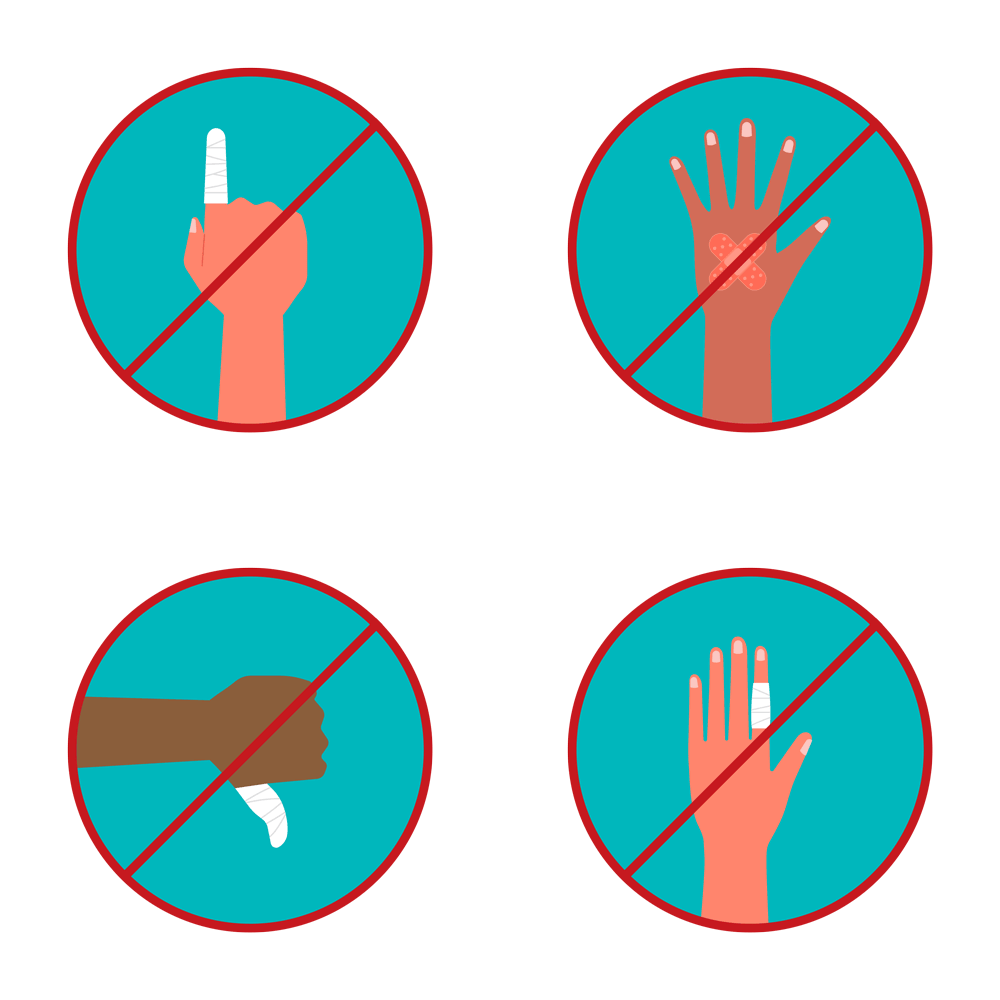 Let’s Eliminate Needlestick Injuries, Together
Some statistics are too important to ignore, and the reality of sharps injuries within UK healthcare hits that mark.
As documented by the Royal College of Nursing’s Sharps Safety Survey:
- 15% of nurses had a needlestick injury in the last year, with 3% sustaining more than one injury.
- 17% did not formally report their injury.
- 63% have had a sharps injury in their career.
We’ve been serving the global healthcare industry for over 40 years with a single mission: making healthcare safer. One of the major ways we do that is through our clinically engineered reusable sharps containers and fully managed service. But even the world’s safest sharps container can’t eliminate the issue of needlestick injuries entirely, albeit a vital part of doing so – it’s a single piece of a much bigger strategy.
The total elimination of NSIs requires behavioural change – industry-wide reporting of NSIs, staff training and education, adoption of safety-engineered devices, smart container placement, and, importantly, the removal of the stigma around reporting NSIs. This cultural shift, coupled with other preventive strategies, forms part of the collective actions needed to safeguard healthcare workers from sharps injuries.
“My injury didn’t occur because I was careless or distracted or not paying attention to what I was doing. This injury and the life-threatening consequences I am now suffering should not have happened.”
Karen Daley – former president of the American Nurses Association
Sadly, Karen Daley’s story isn’t a “needle in a haystack” occurrence, it’s felt by healthcare workers around the globe. As an industry and as a group of people committed to improving healthcare worker safety, we require a collaborative effort to ensure that everyone gets home safely at the end of the day.
To support our healthcare partners in executing their needlestick injury prevention strategies, we’ve put together this library of resources to help drive much-needed awareness and training on the safe handling of sharps.
The Current State of UK Needlestick Injuries
The Human Cost of Sharps Injuries
There’s no convenient time for a sharps injury to occur, and despite the emotional toll they take, many practitioners report a certain stigmatism against reporting NSIs.
“My injury didn’t occur because I was careless or distracted or not paying attention to what I was doing. This injury and the life-threatening consequences I am now suffering should not have happened. And worst of all, this injury would not have happened if a safer sharps container had been in place in my work setting.”n Daley – Former President of the American Nurses Association




Royal College of Nursing’s Sharps Safety Survey
A survey of RCN members (RCN 2021) identified that of the 7,500 respondents:
- 15% of nurses had an injury in the last year, with 3% sustaining more than one injury.
- 17% did not formally report their injury.
- 21% had a mucocutaneous exposure in the last year.
- 40% had not received disease risk advice.
- 63% have had a sharps injury in their career.
This emphasises the need for safer systems to be in place in every hospital.
Needlestick Safety Resources
-
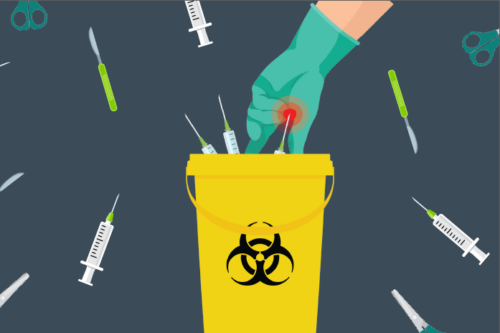 Sharps Injury & Prevention
How to Deal with a Sharps Injury
Needlestick injuries are an occupational hazard for all healthcare workers. Learn more about the right way to deal with a sharps injury.
-
 Sharps Injury & Prevention
Expert Tips for Reducing Needlestick Injuries within Healthcare Settings
Read on to discover some helpful tips from our sharps safety experts for reducing needlestick injuries within healthcare settings.
-
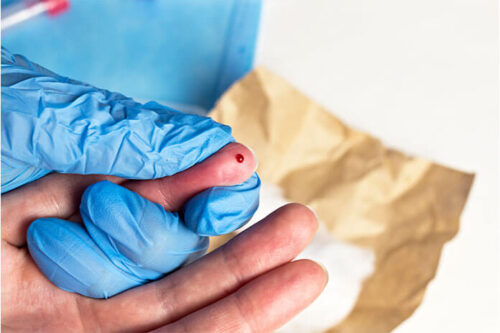 Sharps Injury & Prevention
Strategies and Resources for Needlestick Injury Prevention
Needlestick injuries come with a cost – both a financial cost and a human cost. Here are some helpful resources for preventing needlestick injuries.
-
 Sharps Injury & Prevention
How to Dispose of Needles
Knowing how to dispose of needle waste is essential for anyone working within healthcare. Learn more about the safe and compliant disposal of needles.
-
 Sharps Injury & Prevention
Common Mistakes with Sharps Waste Disposal
To help ensure the safety of staff and patients, and avoid the consequences of improper sharps disposal, here’s a list of the most common mistakes.
-
 Sharps Injury & Prevention
How to Protect Healthcare Workers From Sharps Injuries
A look at the Royal College of Nursing’s sharps injury prevention guidance to see how the hierarchy of controls can be applied to sharps safety.
-
 Sharps Injury & Prevention
Karen Daley: Needlestick Injury Survivor & Safety Advocate
Karen Daley, former President of the American Nurses Association, spent time with us to share her experience as she was stuck by a needle.
-
 Sharps Injury & Prevention
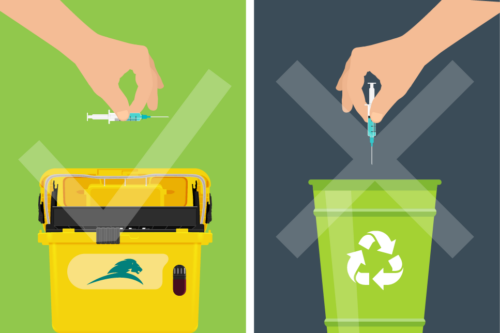
The Dos and Don’ts of Sharps Safety
Adhere to regulations when disposing of sharps in your healthcare facility, as failure to comply may result in major consequences.
-
 Infection Prevention & Control
The True Cost of a Needlestick Injury
Needlestick injuries in the UK are rising at an exponential rates, there is both a human cost and a resource cost associated with the increase in sharps injuries
-
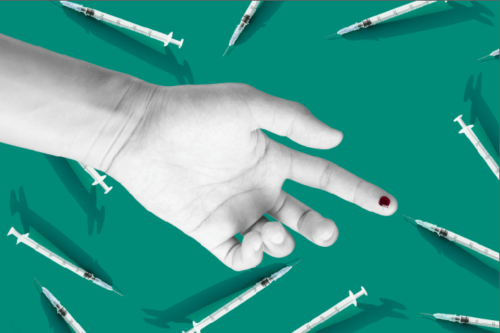 Infection Prevention & Control
What Diseases Can Result From a Sharps Injury?
A breakdown of common diseases associated with needlestick injuries and the importance of proper sharps waste management to reduce infection risks.
-
 Sharps Injury & Prevention
Why Should You Report a Needlestick Injury?
Needlestick injuries are one of the biggest hazards within the healthcare environment, but so many still go unreported. Learn why you should always report NSIs.
Sharps Safety Regulations, Guidance and Research
As a generator of sharps waste, you should be aware of the following documents:
Practical Steps for Preventing Sharps Injuries
Ensure you’re trained in the procedure and the device.
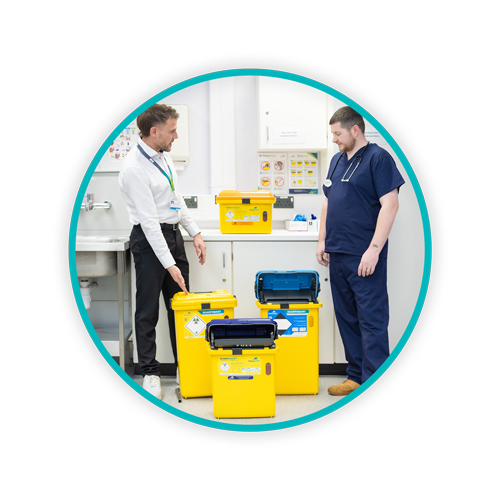
Always use a sharps safety device where available.
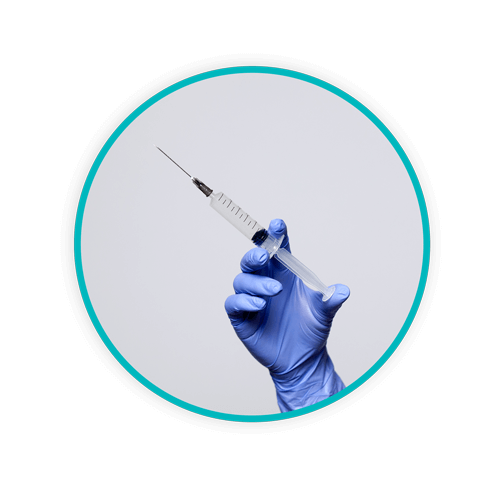
Before procedure, ensure a sharps container is close by, and the aperture is open and clear.
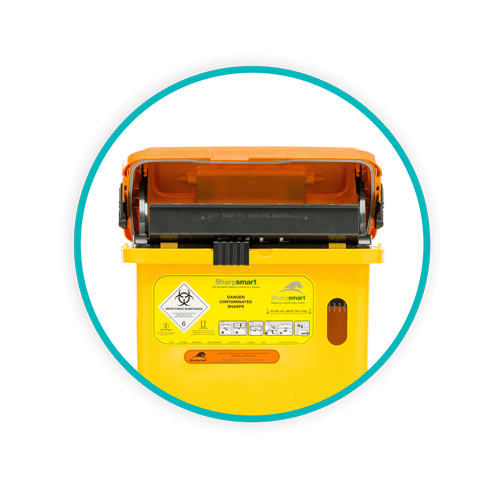
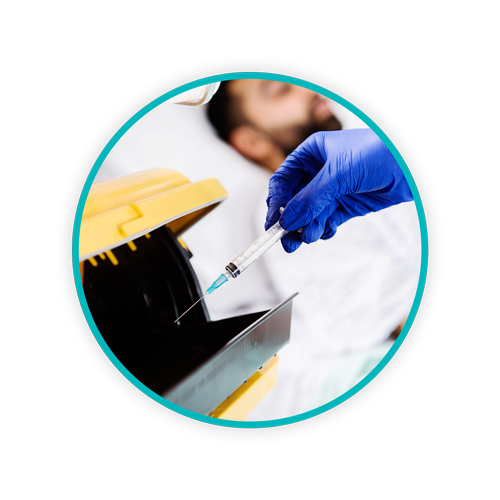
Immediately after use, activate the safety device and discard into a sharps container.
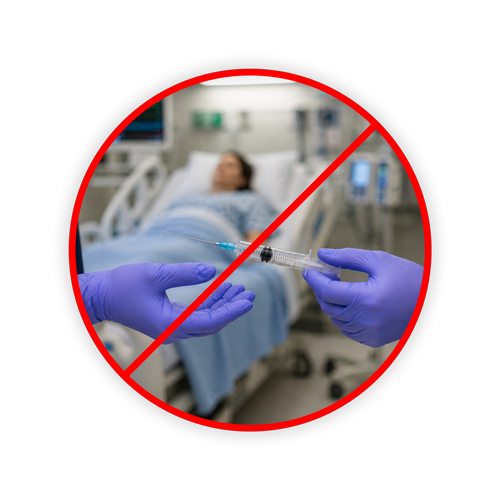
Do not remove or recap a needle. Never pass a sharp by hand, use a neutral zone.
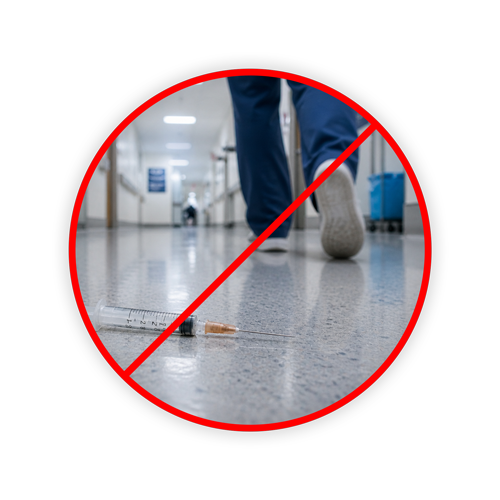
Never leave a dropped sharp for someone else to pick up.
Ensure a sharps container is closed before you move it.
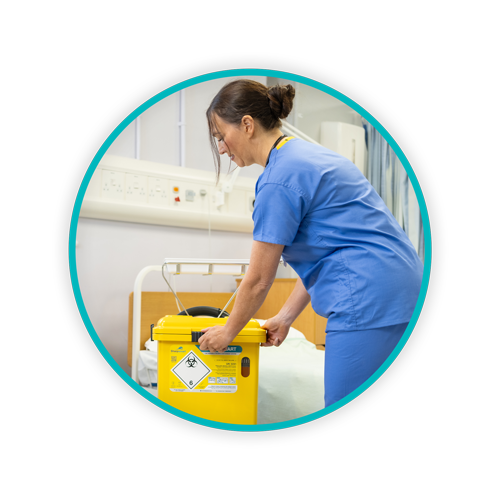
Never overfill a sharps container.
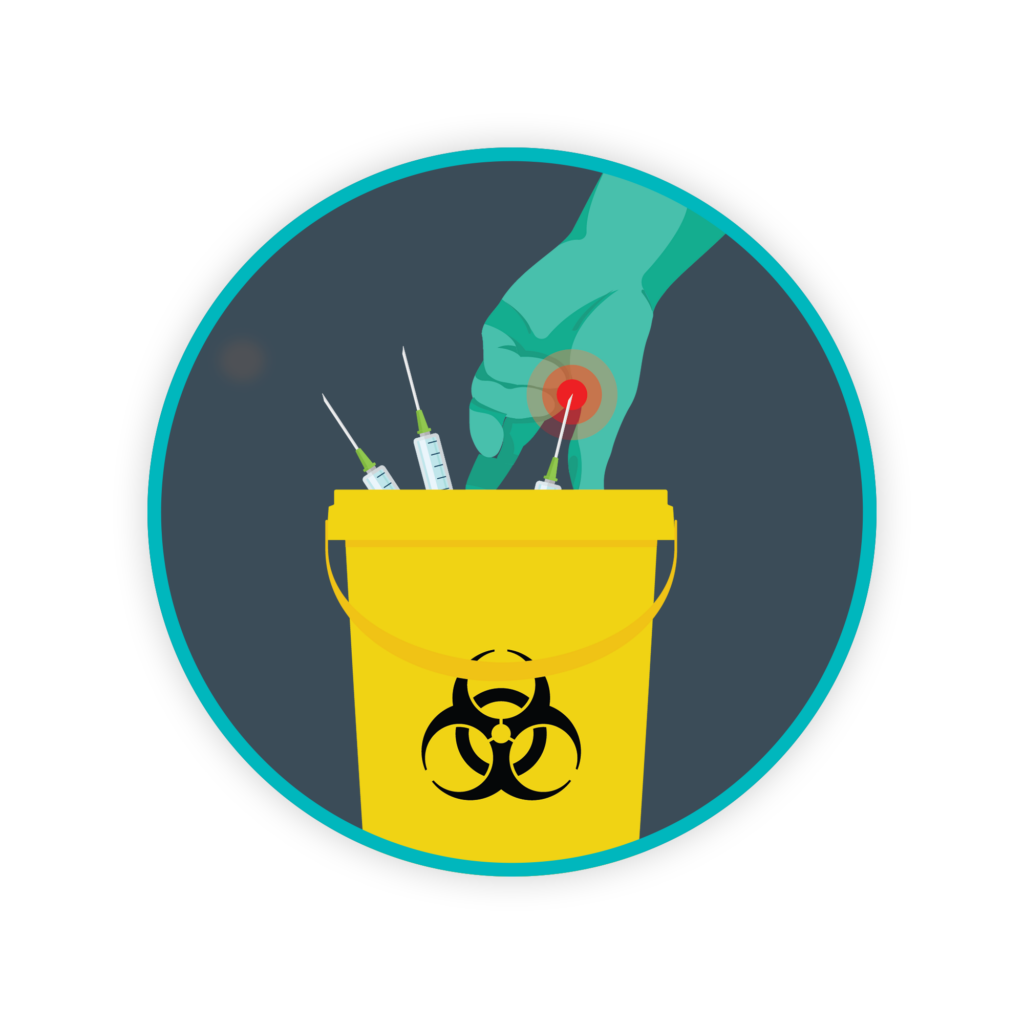
Eliminate Container-Associated Sharps Injuries
One of the easiest preventative strategies for sharps exposures is selecting a safety-engineered sharps container with clinically designed safety features and a proven track krecord of needlestick injury reduction.
Sharpsmart’s Reusables Lead the Industry in Safety
With more peer-reviewed research on its containers than all competitor products combined, Sharpsmart is the safest choice for your sharps disposal needs. Classified as a safety-engineered device, the Sharpsmart container set the ISO 23907-2 standard.
- Hand entry restriction
- Inbuilt overfill protection
- Temporary and permanent tamperproof locking
- Hands-free use, no cross-contamination
- Gravity-activated tray for finer needles
The Role of Sharps Containers in Needlestick Injury Reduction
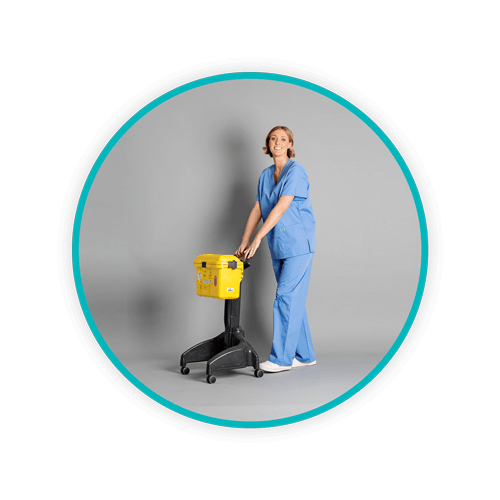
The Sharpsmart reusable is the world’s leading sharps disposal safety system, the result of 5 years of R&D, clinical research, and the passion of our founder, Dan Daniels, to eliminate needlestick injuries.
There’s no sharps container in the world that rivals the Sharpsmart reusable’s safety features, its peer-reviewed clinical studies demonstrating needlestick injury reduction over years of research, or its global before-and-after safety and sustainability results.
Since its creation, the Sharpsmart container has led the industry.
“The Sharpsmart system was associated with an 86.8% reduction of container-associated sharps injuries (CASI), a 25.7% reduction in non-CASI, and a 32.6% reduction in total needlestick injuries.”
Peer-reviewed study published in the Journal of Hospital Infection


Let’s Talk!
Your time is valuable, and we don’t want to play hard to get. You can either phone us directly on the details listed on our contact page, or feel free to fill out this short form and one of our team members will get back to you as quickly as possible.