Why Should You Report a Needlestick Injury?

Have you ever suffered a sharps injury in silence?
Needlestick injuries are one of the biggest occupational hazards in healthcare environments. They can put your health at risk, affect your confidence at work and cause real stress in the moments, days and weeks that follow.
Despite this, sharps injuries can still go unreported. In a 2020 Royal College of Nursing survey of more than 7,500 members, 17% of respondents said they did not formally report their injury. For anyone who has experienced a sharps injury, that may not be surprising. The time immediately afterwards can feel distressing, uncertain and emotionally draining. Reporting it might not be the first thing on your mind.
But it matters.
TOPICS WE WILL COVER:
1 / Quick Answer: Why Should You Report a Needlestick Injury?
2 / What to Do Immediately After a Needlestick Injury
3 / 8 Reasons to Report a Needlestick Injury
4 / Why Needlestick Injuries Go Unreported
5 / How to Report a Needlestick Injury at Work
Quick Answer: Why Should You Report a Needlestick Injury?
You should report a needlestick injury (NSI) as soon as possible because it helps you access urgent medical advice, supports assessment for bloodborne virus exposure, ensures the incident is recorded correctly and helps your organisation prevent similar injuries from happening again.
Reporting isn’t a blame game, and that stigma needs to be removed. Reporting is essential for supporting victims, preventing future incidents, and improving sharps safety in your organisation.
What to Do Immediately After a Needlestick Injury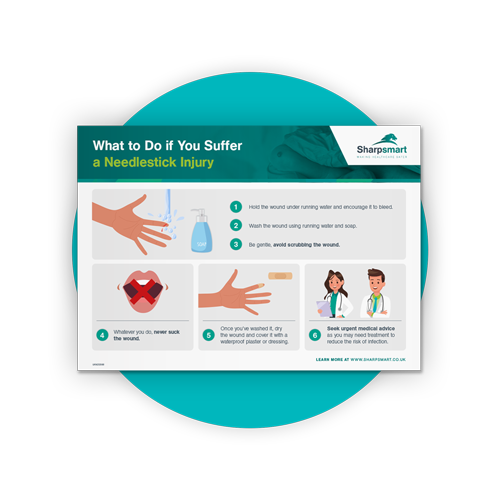
We know you put your all into caring for your patients, but accidents happen. If you ever suffer a sharps-related injury, it’s important to know what to do straight away.
If you pierce or puncture your skin with a used needle or sharp:
1. Hold the wound under running water and encourage it to bleed.
2. Wash the wound using running water and soap.
3. Be gentle; avoid scrubbing the wound.
4. Whatever you do, never suck the wound.
5. Once you’ve washed it, dry the wound and cover it with a waterproof plaster or dressing.
6. Seek urgent medical advice as you may need treatment to reduce the risk of infection.
Once you’ve taken the first steps towards recovery, it’s time to report your injury and make sure the right people are aware. This may include your manager, occupational health, infection prevention and control, health and safety, local incident reporting system and, where relevant, your RCN safety representative.
It’s important to report ALL sharps injuries, not only those involving a used needle or visibly contaminated sharp. Even where the clinical risk appears low, reporting helps ensure the incident is recorded, reviewed and acted on appropriately.
Remember, your health is important too!
For more information, see our blog on ‘How to Deal with a Needlestick Injury’.
A Note on Needlestick Injuries
NSIs happen when healthcare workers are accidentally pricked, punctured or cut by needles or other sharp medical instruments. But don’t be fooled by the name; it’s not only needles that can cause these injuries.
Sharps can include a whole range of medical equipment, including:
- Needles and syringes
- Scalpels and blades
- Lancets
- Cannulas
- Broken glass from medical equipment
- Other sharps instruments that can cut or puncture the skin
Sharps injuries are sometimes described as percutaneous injuries, meaning the skin has been penetrated. The main concern is exposure to bloodborne viruses, particularly where the sharp may have been contaminated with blood or body fluid. The bloodborne viruses of greatest concern include hepatitis B, hepatitis C and HIV.
We partnered with the Royal College of Nursing to discuss needlestick injuries and the RCN’s Sharps Safety Guidance in a webinar, now available on demand:
Sharps Safety – Guidance on the Prevention and Management of Sharps Injuries
Finding the Time to Report a Sharps Injury
One of the biggest obstacles to reporting a sharps injury is time, or more accurately, a lack of it. Time is a valuable resource, and that can feel especially true in healthcare – how many shifts have you finished wondering where the time went?
Despite this, finding the time to report any sharps injury you sustain is important for your health, your colleagues and your organisation. You deserve access to the support and follow-up you may need, and your workplace needs accurate information to identify risks and prevent similar incidents.
A few minutes of reporting can help drive safer practices for years to come.
8 Reasons to Report a Needlestick Injury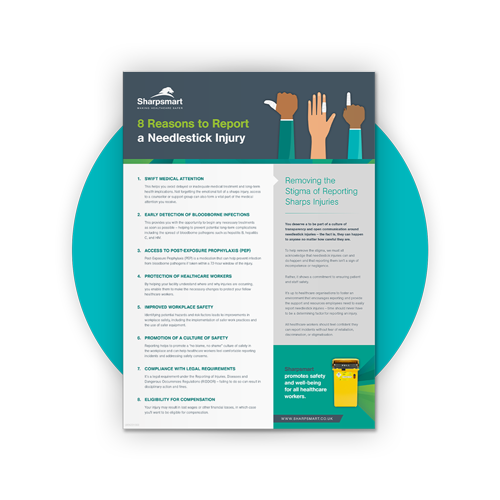
We were never going to settle on one good reason to report a sharps-related injury, we decided instead to compile a list of 8 reasons:
#1 Swift Medical Attention
Reporting helps you access urgent medical advice and avoid delayed or inadequate treatment.
This is about more than just physical health. An NSI can be frightening, upsetting and stressful. Depending on the circumstances, support from occupational health, your manager, a counsellor or another appropriate support service may form an important part of your recovery.
#2 Early Assessment for Bloodborne Virus Exposure
Reporting gives occupational health or urgent care teams the information they need to assess the risk of exposure to bloodborne viruses such as hepatitis B, hepatitis C, and HIV.
The assessment may consider factors such as:
- The type of sharp involved
- Whether the sharp was used or contaminated
- The depth of the injury
- Whether blood or bodily fluid was involved
- The source patient’s known or possible infection status
- Your vaccination and immunity status, particularly for hepatitis B
The sooner this assessment takes place, the sooner the right follow-up can begin.
#3 Access to Urgent Post-Exposure Care
Reporting quickly helps healthcare professionals assess whether you need treatment, testing or follow-up. In some cases, this may include HIV post-exposure prophylaxis, known as PEP.
PEP is a course of medication that may help prevent HIV infection after a potential exposure. It should be started as soon as possible and ideally within 24 hours, although it may be given up to 72 hours after exposure.
PEP isn’t needed in every case; it’s one possible part of post-exposure care, depending on risk assessment. Hepatitis B and hepatitis C are managed differently, which is another reason urgent medical advice is so important.
#4 Protection of Healthcare Workers
By reporting your injury, you help your facility understand where, when and why sharps injuries are happening.
This matters because a single report may highlight a wider issue, such as:
- Overfilled sharps containers
- Poorly positioned containers
- A difficult disposal route
- A procedure-specific risk
- A training gap
- A need for safer sharps devices
- A recurring issue in certain departments
Your report could help prevent a colleague from experiencing a similar injury.
#5 Improved Workplace Safety
Reporting helps organisations identify hazards and take practical action. That action might include reviewing disposal systems, adjusting sharps container placement, improving training, changing local procedures or introducing safer equipment.
Sharps safety is relevant from the point of care and beyond, including how sharps are handled, moved, contained, collected, and disposed of.
When reports are taken seriously, they become a tool for safer practice.
#6 Promotion of a Culture of Safety
Reporting helps promote a ‘no blame, no shame’ culture of safety in the workplace.
NSIs can happen to anyone, including highly experienced professionals. Reporting one doesn’t mean you were careless, incompetent or at fault. On the contrary, it means you’re taking the professional approach and helping to protect yourself and others.
A strong reporting culture gives healthcare workers confidence to raise concerns, share incidents, and ask for help without fear of stigma.
#7 Accurate Reporting and Compliance
All sharps injuries should be reported internally through local procedures.
Some incidents may also be reportable to the Health and Safety Executive under the Reporting of Injuries, Diseases and Dangerous Occurrences Regulations (RIDDOR). This depends on the circumstances. For example, the HSE guidance states that a sharps injury must be reported under RIDDOR if an employee is injured by a sharp known to be contaminated with a bloodborne virus, if the employee later acquires a bloodborne virus through the injury, or if the injury itself is severe enough to be reportable.
If the sharp isn’t known to be contaminated with a bloodborne virus, or the source cannot be traced, it’s not automatically reportable to HSE unless the injury causes an over-seven-day injury, or the employee later develops a disease attributable to the incident.
That distinction is important – internal reporting should happen for ALL sharps injuries, whilst RIDDOR reporting only applies in specific circumstances.
#8 Eligibility for Compensation
A sharps injury may lead to time away from work, medical appointments, treatment, emotional distress or other impacts.
Reporting creates a record of what happened, when it happened and what follow-up was provided. This may be important if you need workplace support, occupational health input or to make a claim for compensation.
Help your staff and fellow healthcare workers stay mindful of the importance of these reasons by downloading our ‘8 Reasons to Report a Needlestick Injury’ poster.
Why Needlestick Injuries Go Unreported
Needlestick injuries can go unreported for many reasons. Some healthcare workers worry they will be blamed. Others feel embarrassed, assume the risk is low, don’t know the reporting process, or simply feel they don’t have the time.
But you deserve to be part of a culture of transparency and open communication around sharps injuries – the fact is, they can happen to anyone, no matter how careful or experienced they are.
To help remove the stigma, we must all acknowledge that NSIs can and do happen, and that reporting them isn’t a sign of incompetence or negligence. Rather, it shows a commitment to staff and patient safety, and continuous improvement.
Healthcare organisations have an important role to play here in fostering an environment that encourages reporting by making it simple, accessible and properly supported – time should never be the deciding factor in whether an injury is reported.
All healthcare workers should feel confident they can report incidents without fear of retaliation, discrimination, or stigmatisation.
How to Report a Needlestick Injury at Work
The Health and Safety (Sharp Instruments in Healthcare) Regulations 2013 highlight duties for both employers and employees when it comes to sharps injuries:
Employers
The safety of your staff is a top priority, so it’s crucial to take immediate action when any sharps-related incident occurs in which an employee may have been exposed to a bloodborne virus.
When notified of a sharps injury, you must record the incident, investigate the circumstances and causes, and take action as required.
Here’s how you can support your employee:
1. Ensure they have immediate access to medical advice.
2. Offer them the medical treatment recommended by the appropriate healthcare professional.
3. Provide clear guidance on what happens next, including testing, follow-up and reporting.
4. Offer emotional support or counselling where needed.
5. Investigate the incident with a focus on prevention, not blame.
6. Use the findings to improve safety systems, training, equipment or disposal processes.
By taking these steps, you’ll be fulfilling your Duty of Care and demonstrating that you value the health and wellbeing of your employees.
Employees
NSIs are often stressful and scary, but reporting an incident in as much detail and as soon as possible helps your employer investigate it effectively and arrange the right support.
Here are some key questions to try to answer in your report:
- Who was injured?
- When and where did the incident occur?
- What type of sharp was involved?
- At what stage of a procedure or disposal did the injury occur?
- How severe was the injury?
- Was any first aid provided?
- Did you seek urgent medical advice?
The more details you’re able to provide, the better equipped your employer will be to conduct a thorough investigation, take appropriate action, and get you the help you’re entitled to.
What Happens After You Report a Needlestick Injury?
Knowing what happens next can take some of the fear out of reporting. After you report an NSI, your organisation should follow its local policy, which may include:
- Recording the incident through the appropriate reporting system.
- Arranging urgent advice from occupational health, urgent care or another suitable service.
- Assessing the risk of exposure to bloodborne viruses.
- Considering the source patient’s infection status, where appropriate and in line with local policy and consent requirements.
- Checking your hepatitis B vaccination or immunity status.
- Arranging baseline blood tests, follow-up tests or treatment if needed.
- Reviewing the circumstances of the incident.
- Identifying actions to prevent similar injuries.
This process should be supportive and confidential. It’s about making sure you feel cared for and that preventable risks are addressed.
A Note on Needlestick Injury Investigations
The extent of an investigation will vary depending on the severity of the incident. For example, if you injure yourself with a clean, unused needle, your employer may only need to record the details, provide any necessary first aid and check whether local procedures were followed.
An injury involving a used needle or a sharp that may be contaminated will require a more in-depth response, including urgent medical assessment and an appropriate investigation into how the incident happened.
The overarching purpose for conducting such investigations is accident prevention, not pointing fingers and placing blame – always remember, reporting is about prevention, not blame.
Reporting Helps Create a Safer Healthcare Environment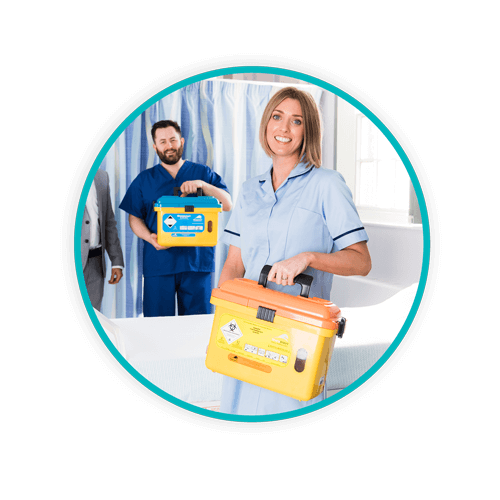
It’s your right as a healthcare worker to feel you can report an NSI without blame or shame, and without time being an obstacle. So, let’s work together to make healthcare safer and create a no-blame, no-shame culture that promotes safety and well-being for all healthcare workers. If you’d like more information on needlestick safety or are looking for safer solutions for sharps waste management and disposal, don’t hesitate to get in touch with one of our experts.

Josh Glover
Let's Talk!
Your time is valuable, and we don’t want to play hard to get. You can either phone us directly on the details listed on our contact page, or feel free to fill out this short form and one of our team members will get back to you as quickly as possible.